Watch the sky
Name what you can. Keep the oddities.
TwilightScan was made for that. A camera stays pointed up. From dusk to dawn it records what moves. In the morning there is a list: planes, satellites, meteors, and the lights that matched nothing.
Free for home use: no cost, no subscription. Runs in Docker on a Linux computer at your house, with an IP camera that speaks RTSP.
For a business, school or observatory, ask about a license.
The review desk, on a real night: 22–23 October
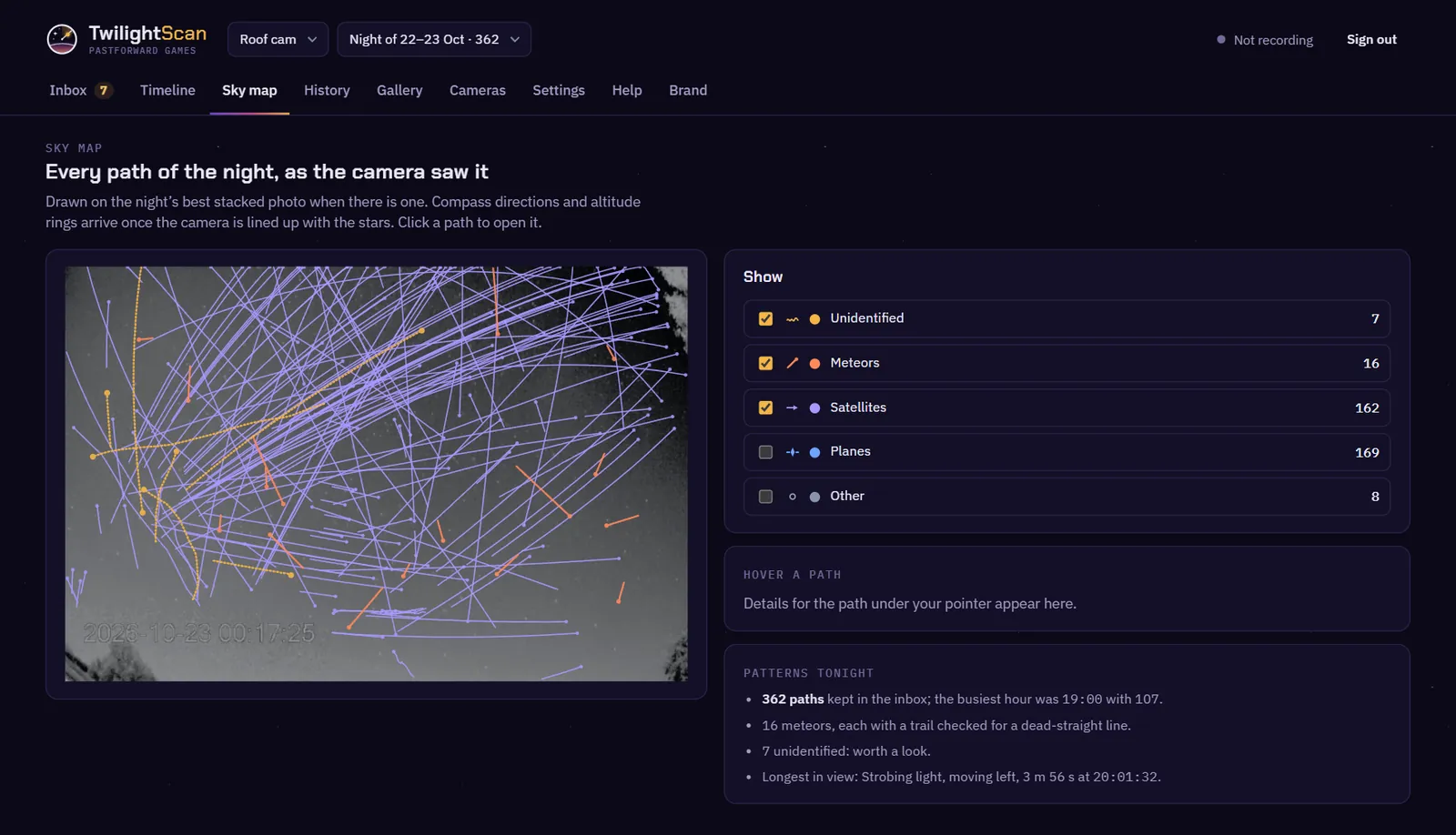
- Oddities
- Meteors
- Satellites
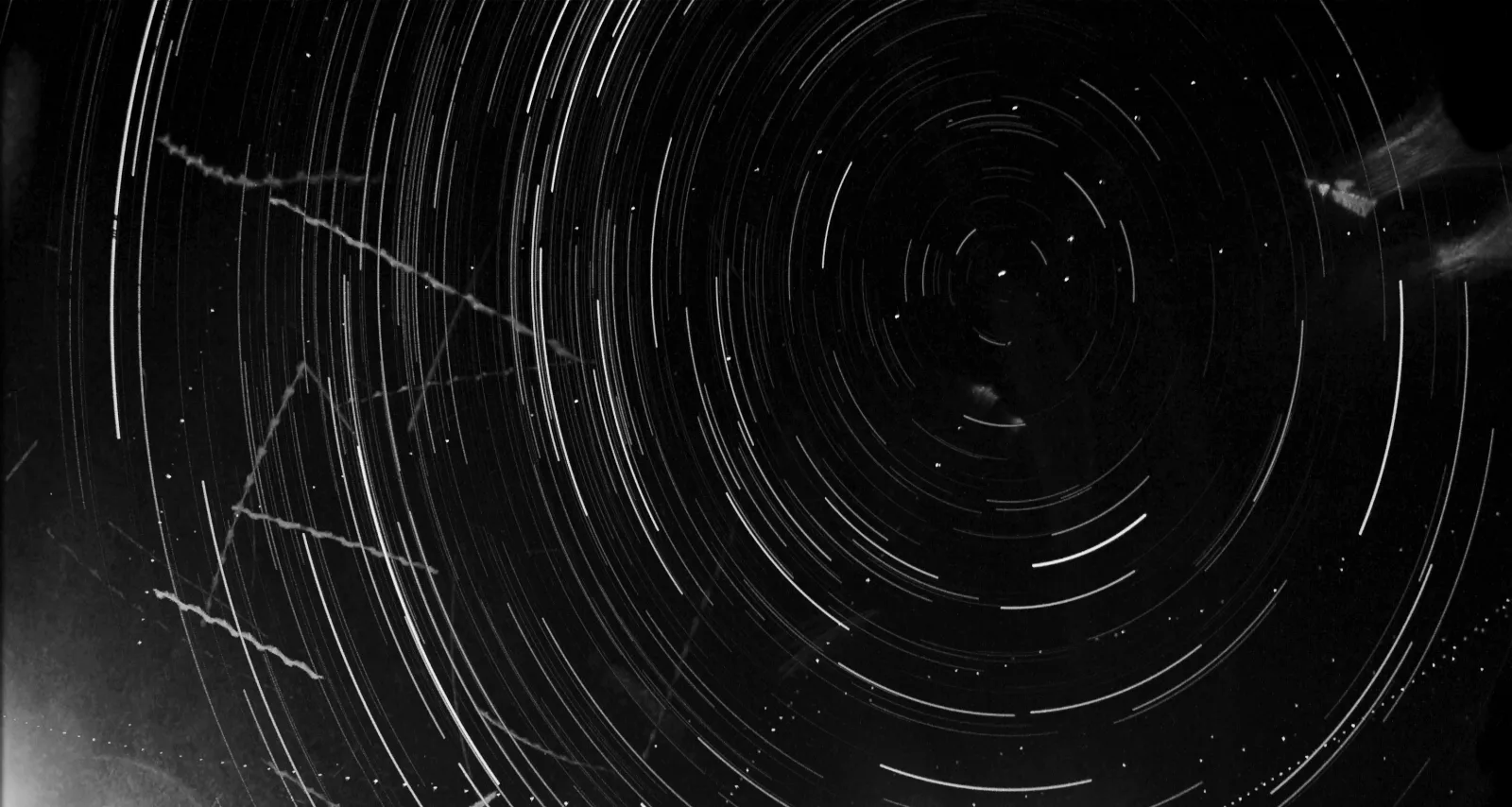
Real footage
16 nights, 4,188 things that moved
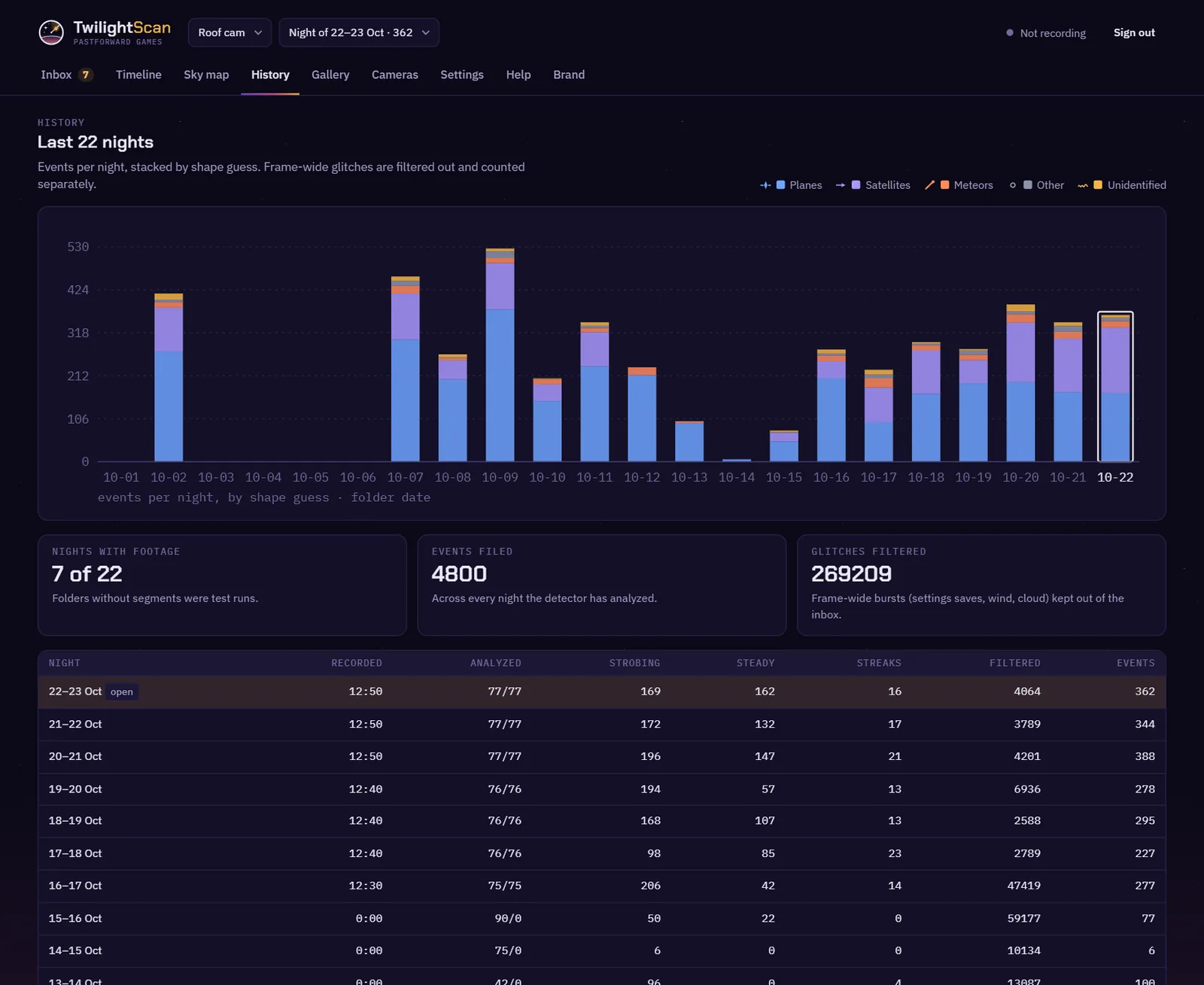
One camera in October: 181 meteors, 878 satellites, 2,798 planes, and 169 it couldn't name. See the meteors, the plane strobes, and the odd ones.
See what it caught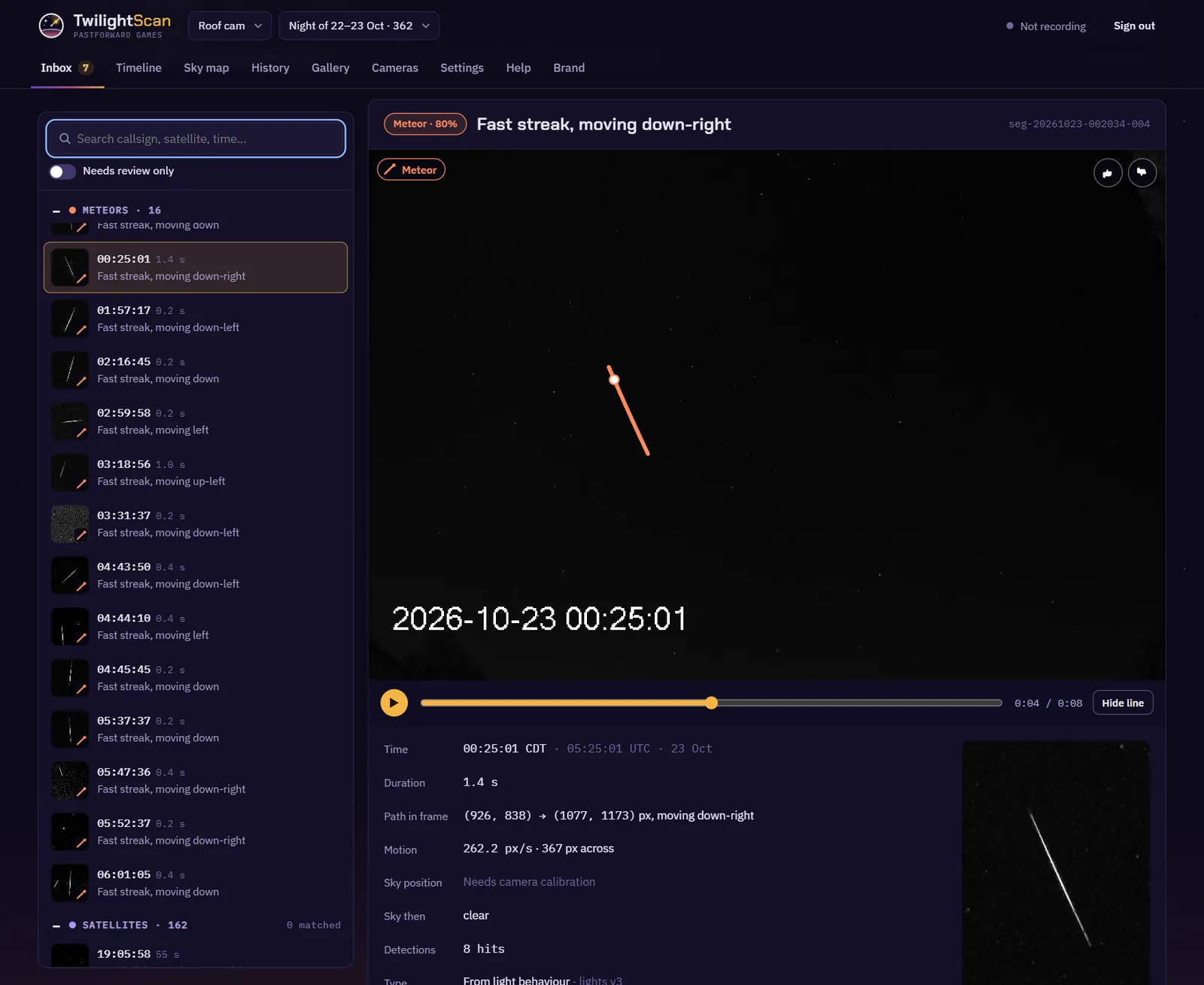
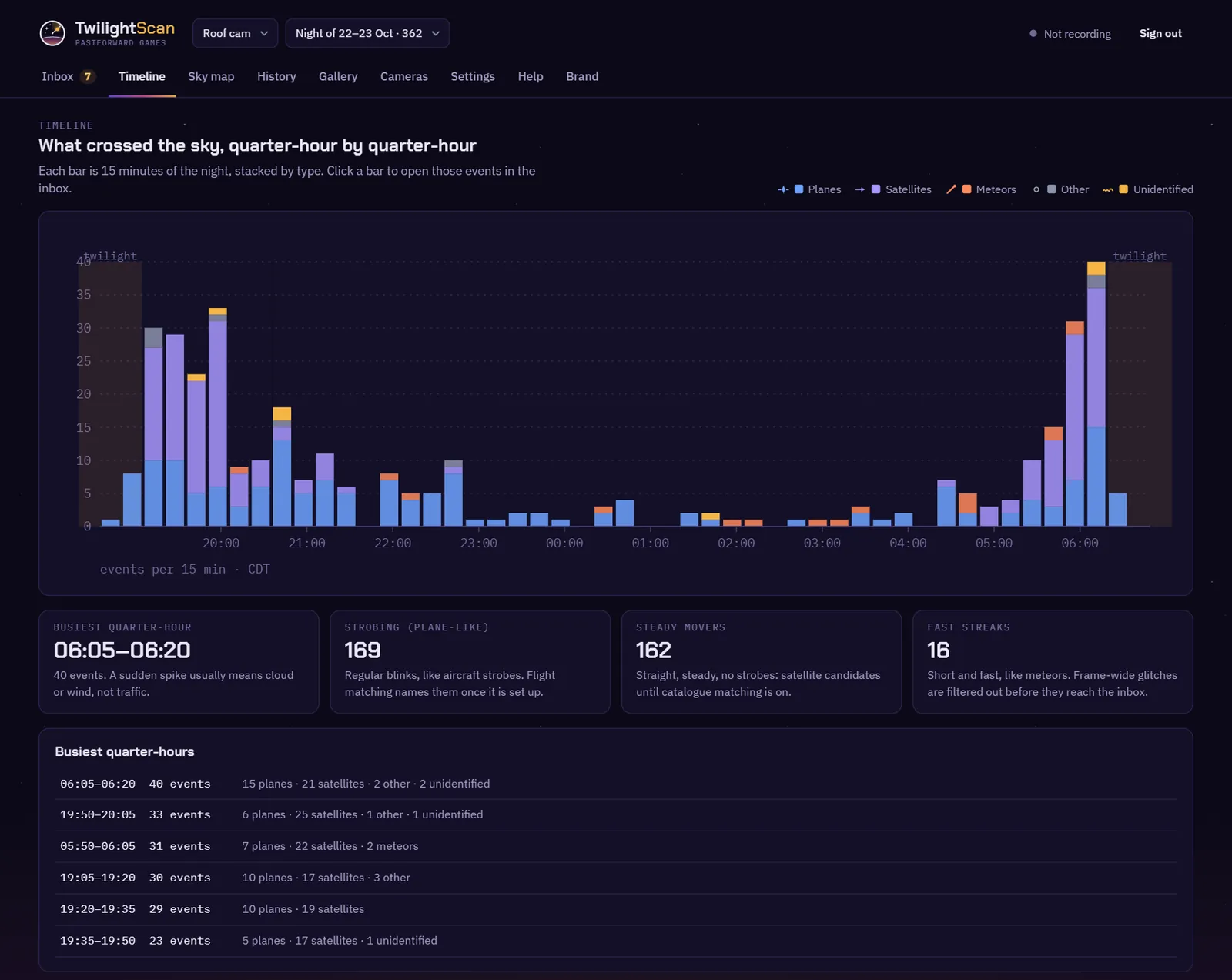
Observe, then identify
The night is the record. A name is a bonus when the light behaves like something known.
Observe
The camera looks up all night. You open one page in the morning and see what crossed, when, and for how long.
Identify
The desk sorts by how the light behaves: strobes, a straight trail, a smooth point. A catalogue name comes when the camera is calibrated. The clip is there either way.
Oddities
Unidentified means nothing matched. Those stay at the top. You watch the clip and keep it, call it noise, or mark the sort as wrong.
At the house
A camera pointed up, and a computer running the recorder. The video stays there. The camera password stays there.
In the morning
An inbox, a sky chart, and a history. Help on that desk files a ticket here if a night looks wrong.
On this site
How it works, install, the camera settings that already worked for one roof, a sample map of stations, and a way to write to us.
A light you cannot place
Write from here, or from Help on the review desk. Tell us the night and what the clip showed.