Real footage · Station YBD · October 2026
What one backyard camera caught
A wide-angle IP camera at Station YBD, in central Illinois, facing north and tilted up, with TwilightScan recording every night from dusk to dawn. Over 16 nights it found 4,188 things that moved and sorted them on its own. Nothing here is staged or sample data.
- Planes
- 2,798
- Satellites
- 878
- Meteors
- 181
- Unidentified
- 169
- Bugs, birds, rain
- 162
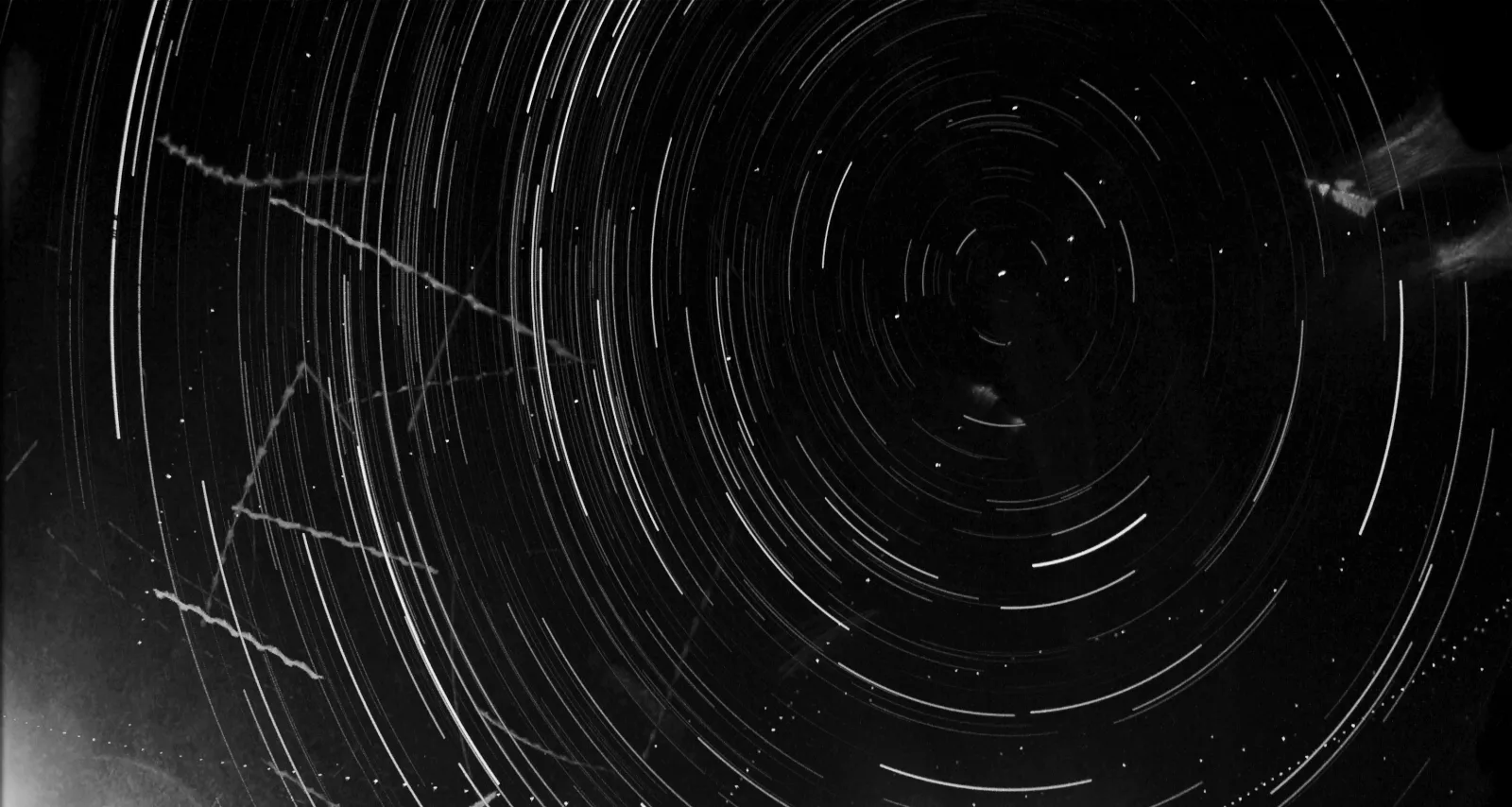
Meteors
181 meteors in 16 nights. A meteor lasts well under two seconds, so TwilightScan keeps a clip of each one and checks the trail is straight before it calls it a meteor. These are the frames of each clip stacked into one picture.
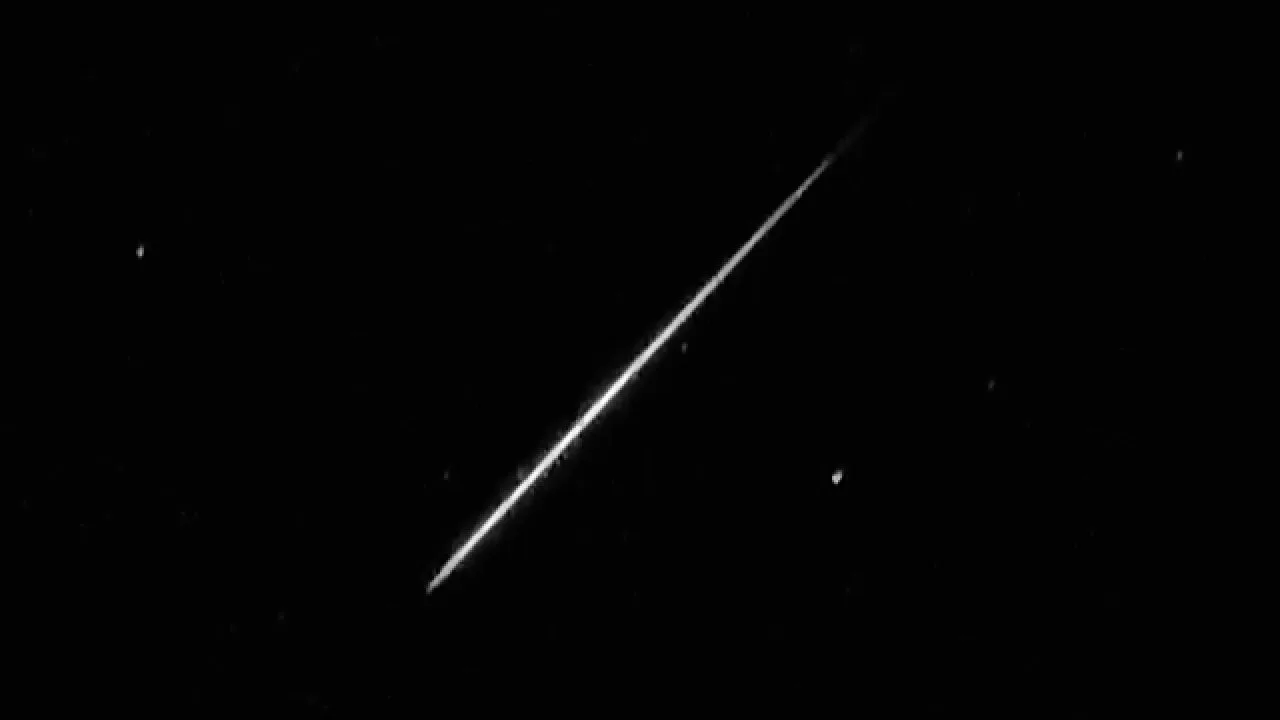
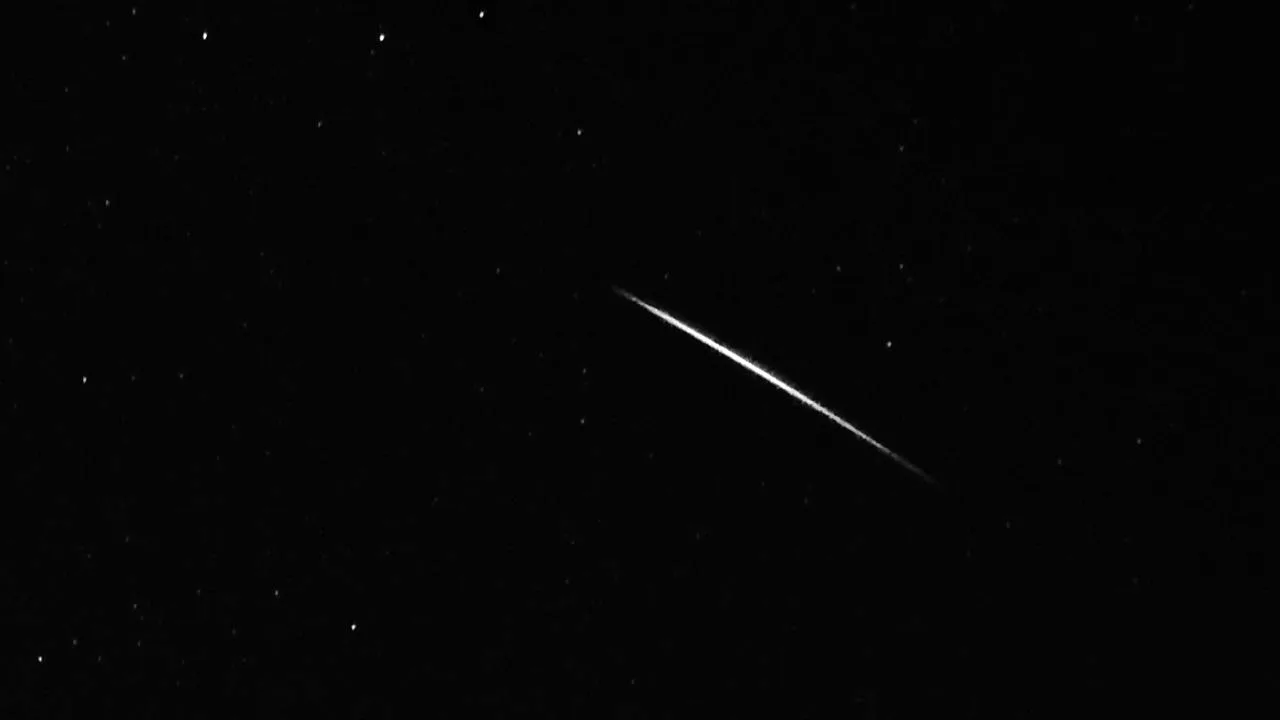
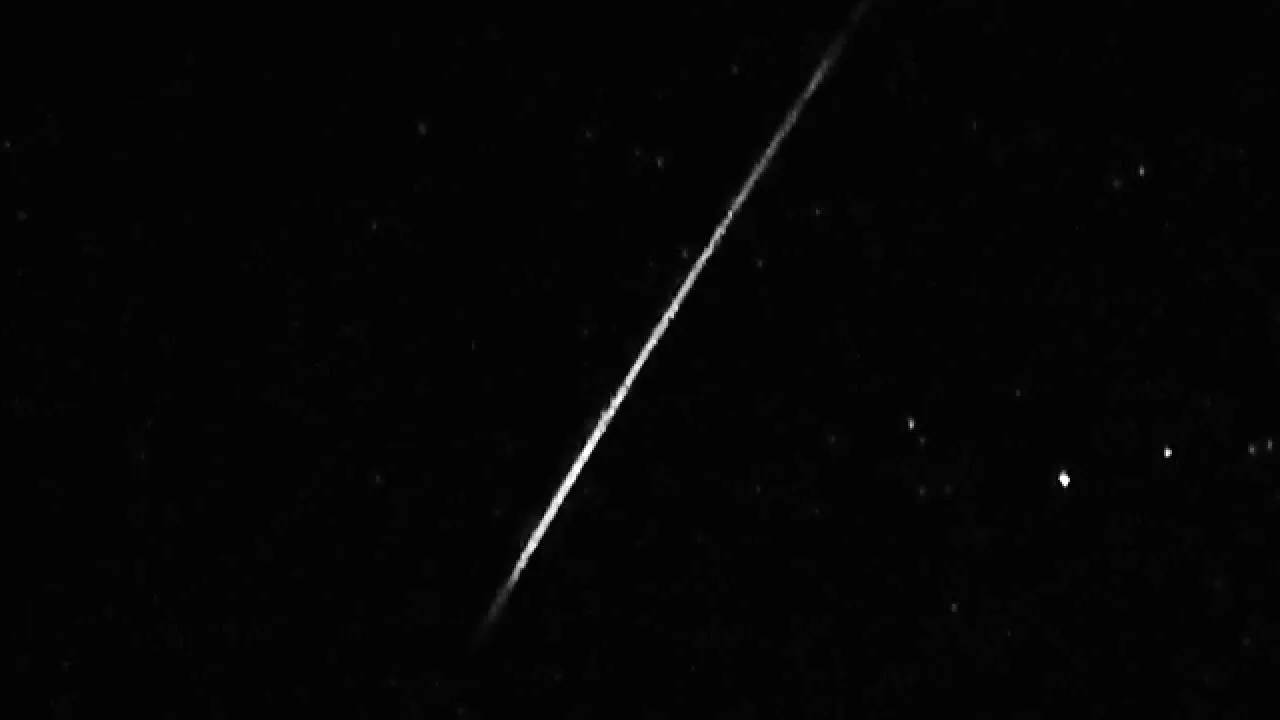
Satellites, a plane and a meteor, as they moved
Each clip is cropped to the patch of sky the light crossed and plays at real speed unless the caption says otherwise. Times are local (Central Daylight Time).
The International Space Station
19 Oct, 5:42 a.m., low in the northern sky. Shown at 4× speed: these 15 seconds are the first minute of a pass the camera followed for 2 min 51 s. It was the brightest thing the camera saw that week, and its track matches the station's published orbit to within about 7 pixels. TwilightScan filed it as unidentified: the wide-angle lens bent the long, low path 100 px off a straight line and made its speed look uneven, and its satellite check expects a straight line at a constant speed.
A Starlink satellite
19 Oct, 5:56 a.m. Real speed: 15 seconds of a 71-second pass. Steady light, a straight path at a constant 27 px a second and no strobe, so TwilightScan called it a satellite. Its track matches STARLINK-11587, one of the direct-to-cell Starlinks, to within 3 pixels. No Starlink "train" (a fresh launch strung out in a line) crossed this camera in October.
A plane, by its strobe
22 Oct, 10:30 p.m. Real speed: 15 seconds of a 63-second crossing. Its anti-collision strobe flashes about every 1.4 seconds, so the path comes out dotted. That rhythm is how TwilightScan tells a plane from a satellite. No catalogued satellite was anywhere near this track.
A meteor, then again at quarter speed
20 Oct, 11:32 p.m. Five seconds at real speed (the meteor itself is gone in under a second), then the same moment slowed to a quarter. TwilightScan called it a meteor because the streak is straight to within 0.1 pixel and fast, about 450 px a second.
The ones it couldn't name
169 tracks were filed as unidentified. When we went through them by eye, most were not mysterious: insects flying close to the lens, car headlights from a nearby road lighting up the bottom of the frame and bouncing around inside the lens, and real satellites (the ISS above among them) whose long, low paths the wide-angle lens bends out of a straight line. The detector only sees a moving light, so it can't tell these apart; a person can. That is why TwilightScan keeps them for you instead of guessing. One catch held up after all that checking:
Three lights flying together
20 Oct, 5:07 a.m. Real speed, 15 seconds. Three steady lights climb the sky together: two on one track about 19 seconds apart, the third on a parallel track beside them. TwilightScan called each one a satellite, and that looks right. But none of the three matches anything in the public satellite catalogue, while catalogued satellites that night matched to within a few pixels. They were still in sunlight while the Starlinks overhead were in Earth's shadow, and moved more slowly across the sky, so they are higher up. Unpublished satellites flying in tight formation are usually military (the US Navy's ocean-surveillance satellites fly like this), but we can't say for sure.
TwilightScan is free, made for the community and for anyone who loves the night sky: free for home use, no subscription. For a business, school or observatory, ask about a license.
Want this over your house? Install TwilightScan. It runs in Docker on a computer at your house, or read how it tells these apart.